

What If the Taj Mahal Was Never Built? History Explained
- S.A.M Tours & Travels
- Agra Sightseeing, Sightseeing Tour, Taj Mahal Tour, Travel, Travel and Tourism
- Agra history, Agra tourism, historical facts, Indian monuments, Mughal Empire, Taj Mahal facts, Taj Mahal guide, Taj Mahal history
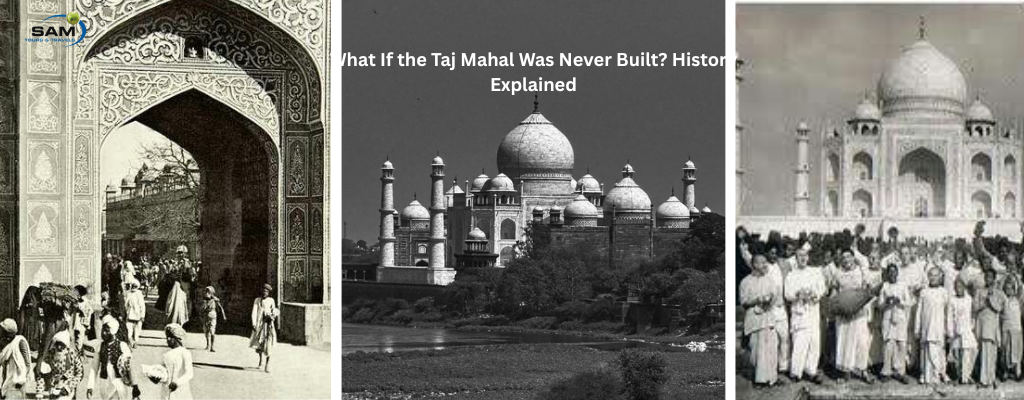
The Taj Mahal is one of the most famous monuments in the world. Every year, millions of tourists travel to Agra to see its beauty. It is known as a symbol of love and one of India’s greatest architectural achievements.
But have you ever wondered what history would look like if the Taj Mahal had never been built?
What if Emperor Shah Jahan had chosen not to construct this monument? How would Agra, tourism, architecture, and even India’s global image be different today?
In this article, we explore a fascinating question: What if the Taj Mahal was never built?
Why Was the Taj Mahal Built?
Before imagining a world without the Taj Mahal, it is important to understand why it was built.
The Taj Mahal was built by Mughal Emperor Shah Jahan in memory of his beloved wife, Mumtaz Mahal. She passed away in 1631 during childbirth.
Heartbroken by her death, Shah Jahan ordered the construction of a grand white marble mausoleum in Agra.
The monument took more than 20 years to complete and involved thousands of workers, craftsmen, and artists.
Today, it stands as one of the finest examples of Mughal architecture.
But what if this idea had never become reality?
Agra Might Not Be a Major Tourist City
One of the biggest changes would be seen in Agra itself.
Today, Agra is famous mainly because of the Taj Mahal. Millions of domestic and international tourists visit the city every year.
Without the Taj Mahal:
- Agra may not have become a world-famous destination
- Tourist numbers would be much lower
- Hotels, restaurants, and travel businesses might not grow as much
- Local jobs connected to tourism could be limited
Agra still has historical places like Agra Fort and Fatehpur Sikri. However, they may not attract the same level of international attention.
The city would likely be less crowded and less developed for tourism.
India’s Tourism Industry Would Look Different
The Taj Mahal is often the first image people think about when they hear the word “India.”
It appears in:
- Travel advertisements
- Tourism campaigns
- Movies and documentaries
- International travel guides
Without the Taj Mahal, India may have promoted other landmarks instead.
Possible alternatives could include:
- Jaipur forts and palaces
- Varanasi ghats
- Kerala backwaters
- Khajuraho temples
India would still be a major travel destination, but its global identity may look very different.
The Symbol of Eternal Love Might Not Exist
The Taj Mahal is often called the “symbol of eternal love.”
Many people visit it because of the romantic story behind its construction.
Couples from around the world come to see the monument and experience its emotional meaning.
Without the Taj Mahal:
- Another monument may have become a symbol of love
- Agra may not be popular among couples
- Pre-wedding photography near the monument would never exist
The romantic history connected to Shah Jahan and Mumtaz Mahal would likely be much less famous.
Mughal Architecture Could Have Taken a Different Path
The Taj Mahal changed architecture forever.
Its design influenced many buildings across India and beyond.
Features such as:
- White marble work
- Symmetrical gardens
- Detailed carvings
- Dome structures
- Persian and Islamic design elements
became highly admired.
Without the Taj Mahal, Mughal architecture may have developed differently.
Future buildings may not have copied the same artistic style.
Many architects believe the Taj Mahal became the peak of Mughal design. Without it, another structure may have taken that place.
Shah Jahan’s Legacy Might Be Different
Today, Shah Jahan is remembered mainly because of the Taj Mahal.
Without this monument, history may remember him differently.
People may focus more on:
- His political decisions
- His role as emperor
- Family conflicts within the Mughal Empire
His image as a loving husband may never become famous.
The emotional story connected to Mumtaz Mahal might slowly disappear from public memory.
UNESCO World Heritage Recognition Could Change
The Taj Mahal is a UNESCO World Heritage Site and one of the New Seven Wonders of the World.
These titles bring global attention to India.
Without the Taj Mahal:
- Another Indian monument may receive greater recognition
- International tourism patterns could shift
- Agra might not receive worldwide fame
India would still have many important monuments, but none may have the same global recognition.
Agra’s Economy Would Be Smaller
The Taj Mahal supports thousands of jobs.
Many people earn income through:
- Hotels
- Restaurants
- Tour guides
- Transport services
- Photography
- Souvenir shops
Without tourists visiting the Taj Mahal, many local businesses might struggle.
Agra’s economy could be much smaller than it is today.
Would Another Monument Replace the Taj Mahal?
History often changes when one important thing is missing.
If the Taj Mahal had never existed, another monument may become India’s main attraction.
Possibilities include:
Agra Fort
This Mughal fort already attracts many visitors and could have become Agra’s biggest attraction.
Fatehpur Sikri
The historical Mughal city may have gained more attention.
Jaipur Palaces
Royal architecture in Rajasthan could have become India’s most famous travel image.
Varanasi
Its spiritual importance may attract even more international visitors.
Still, replacing the global popularity of the Taj Mahal would be difficult.
Could History Really Have Changed?
Yes, history often changes because of one decision.
The Taj Mahal influenced:
- Tourism
- Architecture
- Culture
- Global perception of India
- Local economy
One monument shaped the identity of an entire city and became a symbol for a country.
Without it, India’s tourism story could look completely different.
Final Thoughts
The Taj Mahal is more than a beautiful building. It is part of India’s history, culture, and identity.
If it had never been built, Agra might not be world-famous, tourism would look different, and Shah Jahan’s story may not be remembered the same way.
Although history cannot be changed, thinking about “what if” questions helps us understand how important certain landmarks truly are.
The Taj Mahal is not just a monument. It is a piece of history that changed India forever.